Please visit our home site at www.TRILOBOATS.com.

Anke and I live aboard WAYWARD, and wrote about it's design and construction at ABargeInTheMaking.blogspot.com.

Access to the net comes and goes, so I'll be writing in fits and spurts.Please feel free to browse the archives, leave comments where you will and write... I'll respond as I can.

Fair winds!

Dave and Anke
triloboats swirly gmail daughter com

Showing posts with label Interviews. Show all posts

Sunday, May 3, 2015

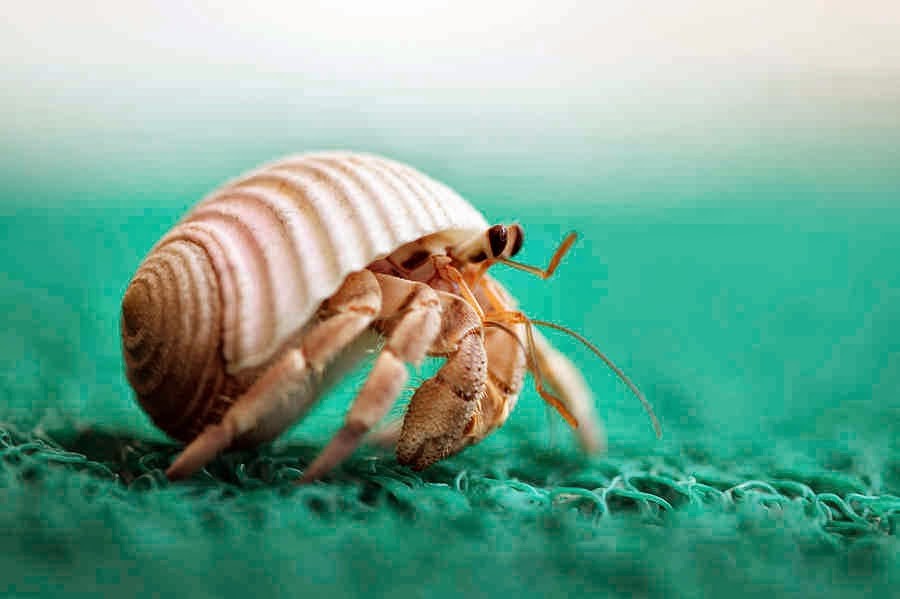
Hermit Crabbing: Another Way to Go


Hermit Crabbin'
Prints available HERE

The ideal is to feel at home anywhere, everywhere.
- Geoff Dye


Hermit Crabbing: Another Way to Go
How Michaela Poppleton aka Mimi P rolls...

Over at VolksCruiser, Bob Wise asked his readers what we would like in a VC. Among the responses was Mimi P's alternative approach, Hermit Crabbing. Michaela Popperton, the woman behind the netID, graciously expands, here, on her comments.

The beauty of the HC approach is that one can sample from the smorgasbord of possibility - both in sailing grounds and types of vessel - without the heavy investments of time, money and energy that a fully found vessel can consume. Yet one is much more connected to one's time aboard than in, say, a bareboat charter. Such kits are scalable, and can be personalized to many styles of cruising, ranging from open beach cruiser to trade wind sled.

Just find a shell!

The following is her lightly edited account, reformatted from our correspondence...
.

Bio

I'm just about to turn forty-four years of age, was born and raised in and around Toronto.  I studied architecture in university but never pursued it beyond that, becoming rather turned-off by the profession's narcissistic self-obsession... which is pretty ironic seeing as I've ended up in the middle of all-things-yacht which is about as self-absorbed as it gets.

I work in the marine biz, so I have a sort of love-hate relationship with boats.  It's a career that has afforded me some great opportunities to live in lands far-away, but it also sometimes takes the fun out of doing something as simple as going sailing; there are days when the last thing that I want to do is deal with another boat. even if it is my own!  I'm shore bound for a while right now, so hopefully that will help to rekindle the passion; to freshen the breeze, in a way.

I've sailed all my life, raced much of it, and being a natural tinkerer I got involved in production yacht building with the late PDQ Yachts in the late nineties.  I started on the shop floor fitting joinery into the boats, but between having a pretty solid boating background and being pretty bright I quickly moved into a role managing (ack...) the existing and in-development sailboat lines, and eventually ended up in a role as the president's right hand and acting as a sort of liaison between the engineering, sales, and production departments.  
[I'm now] acting as [...] liaison between a customer or marketing group, a designer, builders and a boatyard.  The customers know what they want and the designer knows what it should be.... then I figure out how and what it will take to build it, and then convey that to the hands in the yard.  It sounds pretty glamorous, and sometimes it even is.... but it's mostly a lot of drudgery penning specifications, populating bills of material, and schedule building.

I've built on the beaches in Thailand, in the furnaces of Taiwan, up the river in Argentina, aside the Broads in the UK, down the Eastern Seaboard of the US, and most recently in sunny, breezy Western Australia.

I took to living aboard out of economy more than anything else.  I could afford to keep a home or a boat, but trying to keep both was going to be a stretch... so I chose the boat.  Doing the kind of work that I do, one or two or three years at a time, demands that I be flexible, unencumbered, and mobile; this is reflected in my hermit crab style of boating, and living.  

The Hermit Crab Approach

I've taken [...] a cue from the hermit crab.

I have a small collection of good "stuff" that I take with me from boat to boat as my situation or locations change. Everywhere in the world I go there are countless almost-retired hulls waiting shoreside for me to move in, and they are generally of a type that suits well the local waters. It is easier, and less expensive, to pack my kit in a crate and ship it across an ocean than it is to forever keep a boat that has passage-making capability that is only occasionally used to advantage.

Essentially, it's a collection of decent and useful gear that I've collected over the years, some of it purposefully bought and some of it scavenged, that lets me move onto just about any boat in the twenty-five to thirty-five foot range without that boat having to be already well fitted and maintained.

It allows me to use (just about) any of the countless, long-forgotten hulls that litter the marinas and yards all around the world.  I have been involved in the construction of so many of them... an enabler, in a way... to the wastefulness.  It bothers me, so I find some joy in giving them even a brief bit of care and extended usefulness.


The Boats

None of them are going to be up to making long passages, so I don't get too attached to them and happily leave them behind when I need to move some place new.  Cost and effort to restore or renew any of them would be highly unlikely to be recovered, so I minimize my investment: easy-come, easy-go.

I actually put very little effort into any of my own boats, because it's the sailing that I love and not the boat; it's about the wind and the water, not the gadgets and brightwork.

When it comes to choosing a boat, I usually let the location do much of the deciding for me.  They never need to get me very far from where I already am, so those qualities that make "great cruisers" don't necessarily need to be paramount; it affords me quite a lot of flexibility and freedom.

The estuaries in the UK really cried out for a shallow-bellied, tall-rigged bilge-keeler (which was wood, and so full of rot that is sort of "oozed" over the waves!), while in Fremantle I made the most of the perpetually-gorgeous sailing conditions and picked up an older generation lightweight racer that wasn't great to live on, but absolute bliss to sail.  In Toronto I had a C&C Redwing 30 and a Niagara 30 at different times: very different boats, but both had decent headroom which made winters bearable.  In Argentina I spent the most out of any of them when I found an old German Frers IOR warhorse and proceeded to regularly get it stuck in the mud.  It was quite enjoyable to actually meet him at his home, and tell him the story ; )

I like boats that have histories, and stories.  When they're shiny and new and washed everyday they seem "silent" to me.  None of them have been over ten thousand bucks to buy, and generally they have been around five or six.

Reselling at the end is the hard part and could take forever, or even never happen. Having put little in I really don't need to get much back out so I cut my asking price right down to a few thousand dollars and someone usually jumps on it.  People are far more likely to buy an old boat that is the in the water and being used than they are a boat that has been sitting dry for years, or decades.  I look at what I spent as my rent for the duration, and my return covers the expense to move me and my gear to the next place.


The Kit

I got tired of always dealing with engines and old outboards, so I bought a shiny new 6hp Yamaha one day when I was feeling plush.  It is a little undersized at times, but the weight savings compared to the 8hp models is enormous and lends me confidence when I'm hefting it on and off of mounts, and it saves 15 kilos worth of freight each time I move.

I have a collection of plastic UN-approved and sized 20L jerry cans: two red for petrol, four blue for potable water, and two white for anything else.  This way I don't need to rely on integral tankage, and having all of them of equal and manageable size allows them to stack beautifully.  I made bicycle panniers that hold one can each side, but I fit them to whatever bike I find locally.
I have a galley box with all of the essential utensils and implements, and a single-burner MSR multi-fuel backpacking stove that happily runs on the same gasoline as the outboard, so I only need carry one type of fuel.  I have a collapsible charcoal grill at the moment as well, which generally (but not always!) gets used shoreside and sometimes with foraged wood.

I use a Sawyer gravity fed water purifier when needed.

I'll probably add a composting toilet at some point, when I come across a boat that doesn't already have something that is make-workable.

I have a hefty Whale portable manual bilge pump that so far has (luckily) been used for everything except pumping water out the bilge.

Electrical systems are the hardest part to generalize and need to be dealt with individually.
Individually rechargeable lights are always a great solution, though more often than not I manage to cobble something workable together with what's already there.  I have considered building myself a box-mounted distribution panel and harness "octopus" that I could move from one boat to another (there are really only a couple of layouts used in sailboats in this size range, right?), but again, I've not yet run into a situation where what was already there was a completely lost cause.  I like making what I have, work.

I bought a used Watt & Sea hydro-generator from a guy who was disappointed by its performance (expecting miracles, I suppose...) and that has proven fantastic as a source.  I take the moorings that nobody else likes because they are in a high-current or -tidal flow, and it happily spins out watts all day and night. I really like the fact that it encourages me to sail more.  It starts putting out current at less than two knots of flow, but really shines when it has about five... so that does create a practical minimum waterline length on any potential hull.  It is also pretty pricey...   

I've also got a roll-up solar panel that is useful at keeping the anchor light working when I'm away from the boat, or keeping the cell phone and stuff charged.

The hydro-gen comes with it's own controller, as does the solar panel.  I let them both operate independently, but it is rare that both are ever used at the same time.

All of my navigation kit (software, GPS, etc) is laptop based, and I have both wifi and cell boosters.  The cell booster isn't completely universal, but has worked fine over my past few locations.  It probably seems extravagant, but my data plan is my connection to the world and lets me work on contracts elsewhere; it's a necessity for work, not for living.

I have an old-but-oddly-reliable Simrad tiller pilot as my extra set of hands, and I generally have enough electricity from the hydro-gen to run the pilot and my laptop while sailing along and working from the cockpit all day; I reach off in one direction in the morning and then come about and reach back in for the afternoon.  Life is good sometimes : )

I use handheld compass, GPS and VHF, but mostly as a safety tool in the event that I go MOB so they are always stashed in my PFD.

Tools... Of course, I've got an assortment of the usual hand tools including fids, needles and a stitching palm that lets me keep old rags useful and earn a few extra bucks when I need to.  There is also a bunch of useful bits of rigging that I always take with me, ranging from shackles and blocks to cordage and tape.  I organize it all in canvas bags inside of appropriately sized buckets, which are always useful to have on hand.

I don't have anything too crazy, partly because I work in and around boatyards so a few bottles of beer and big blue eyes often get things "done" for me.

I have two Japanese-styled handsaws, because they are light and break down into very little space.  I like to whittle, so I have few knives and gouges and rasps.  Spanners, sockets, screwdrivers, allen keys, side cutters, linesman's pliers, caulking gun, rubber mallet, hatchet, sand paper, paint brushes, scrapers.  The outboard came with every tool that is needed for user-servicing.  It usually all sits in a bucket.

None of it is interesting or exciting, but on a boat that doesn't have too much, not much can go wrong nor needs to be fixed.

I avoid power tools, because the electricity common to each of these places varies.  There really are very few places where 110-120VAC is used in the world, but I'm still hesitant to commit to 220-240VAC tools (adapting two available 120 receptacles to one 240 line is easy enough) even though I don't have a really good reason why I haven't.  Aside from not having had to yet....  Toss in the differences in frequency, and the chargers of cordless tools get even more limiting.

Fasteners and adhesives... Ziplock baggies full of new and reclaimed screws, bolts, nuts, and washers.  In bags they all cram down into a very small space and are worth shipping especially after an Asian stint.

Fibreglass is very easily available so I don't bother, and resins have a very short shelf life so they really shouldn't be kept.  They would have shipping issues as well, I suspect.

I've always got a tube of silicone and a tube of not-too-adhesive bedding compound on hand, because old boats leak.  A lot.  I don't ship any of it.  I suppose I could figure out at which point a product becomes a candidate for saving and shipping based on weight, but I tend to look at it as partial tubes have such a short life that they aren't worth going through the hassle of listing, declaring, and proving safe to ship.  I'm really good at giving things like that away to the next guy.


Shipping the Kit

I don't have a preferred method of shipping my gear, instead trying to make the best use of carriers and agents that we're already using at the boatyard.  Using local shipping agents also lets my little and relatively light pallet ship as part of a full consolidated container, though that sometimes means that things take a bit longer to get back into my hands at the other end.

I often use an empty pallet and crate from an engine because they are sturdy and light, and let the customs agency that has been getting all of the boat building material into the country figure out how to get my stuff out. I have always had easy access to crates, so I've not thought much about what it could be if I were to want it to be reusable. Maybe a two-piece dink could be designed to close like a clamshell with everything inside....

It is always surface-shipped, as none of the previously fuel-containing articles can be shipped by air.  The same is true of lithium batteries in many cases, so that needs to be kept in mind.  
My most recent shipment coming back to Toronto from Perth had a bunch of clothing and "stuff" and weighed in just over 100kg crated and took about a month, door-to-door; those two points are just about as far apart as is possible on the globe....

General Thoughts

I think a camp cruiser kit is quite viable, with thousands of twenty to twenty-four foot boats out there to be had wherever you might be or want to go.  There were so many of them built and they are easily and inexpensively had that buying two just to merge them into a single, slightly better one is an option (especially with scrap lead selling for over a dollar a pound so the discarded keel might help finance other parts of the project).  Camping gear is readily available, and so long as one doesn't fall for the marketing it can be very affordable and all fit in the trunk of the car or a broom closet at home.  Maybe an all-in-one kit box that is freight-company-acceptable might be marketable?

Languages!  It makes things interesting, that is for sure.  I used to work really hard to learn the local language, but have found that most of the official entities and port authorities have provisions in place for dealing with English-speakers.  Learning the indigenous language makes my day-to-day life of shopping for vegetables and underwear a lot easier, even if only because I am trying and the locals appreciate that.  As far as work goes, I tend to deal largely with fairly well educated people and they have long known that being able to communicate in English is invaluable, so it has made it easier for me.  Sometimes, though, there is merit in keeping my mouth shut, my ears open, and my comprehension secret....

To Sum Up
Advantages to the way that I approach life afloat?  Two advantages, and two reasons:

(i) The biggie:  It gets me on the water wherever I might be quickly, as I usually don't have to build or repair much of anything.  I hand over an envelope with a bit of cash, shake hands, check the through-hulls, paint the bottom and go.

(ii) The fun:  It lets me pick a boat that suits the waters that I will be in and the type of sailing that I will be doing, even if that might sometimes be dock-bound.  I can afford to be a bit frivolous and try out something different if I want to because I'm not overly invested of time, money, nor sentiment in the boat itself.

(iii) The peace of mind, on a professional level:  I'm holding myself accountable for the part that I have played in creating the mess... the wasteland of forgotten dreams... by quite literally living with and in it.

(iv) The right thing, on an environmental level:  The most environmentally-friendly boat choice (at least as it relates to construction) is one that has already been built.  I'm not making anything worse.

*****

Clearly, hermit crabbing is not for ‘all the people, all the time’. But it’s something to keep in mind when opportunity arises over some far horizon.

It’s a way to see some more of the world, accumulate inexpensive education or establish a base along any sea.

The possibilities are endless....

Sunday, April 1, 2012

Guerrilla Gardening: Interview with James-David Sneed

Apologies to Grant Wood's American Gothic


As our communal spaces—town squares, streets, schools, farms, plants—are displaced by the ballooning marketplace, a spirit of resistance is taking hold around the world. People are reclaiming bits of nature and of culture, and saying ‘this is going to be public space’.


Guerrilla gardens have been gaining momentum and publicity across the world. Whether for comestible, aesthetic or political purposes, gardeners are challenging the constraints of private and tightly controlled 'public' properties. Land considered marginal or 'wasteland' is being made to bloom without license.

For nomads and others underway, without a legal foothold on the land, our guerrilla gardens will have a particular character. They will be diffuse plantings of enhanced wild and hardy domestic varieties. They will be designed to thrive with little attention and offer something at most any season.

The following interview, while focusing on SE Alaska, presents possibilities and attitude which may be applied anywhere. Gardening is easier almost anywhere than here. So long as one works with their environment, guerrilla gardens can concentrate and supplement the food resources of any area.

Southeast Alaska has thousands of micro-climates across it's approximately 300 mile length and seventy mile breadth. What varies is amount of snow pack, days of snow and freezing conditions, amounts of rain, maximum and minimum temperatures (summer and fall), and altitude.

What is constant across the region is the long summer daylight hours, the short winter daylight hours, and the effect upon plants of the rapidly increasing light in spring and the rapidly diminishing light in fall.

Due to the maritime influence, gardens at sea level often have months longer frost free dates than do many esteemed areas much farther south, extending our growing season. Yet Southeast is a boreal rainforest; its 'shoulder seasons' tend to be cool and rainy, with somewhat drier weather and long summer daylight hours between. Amounts of rain vary a bit from north to south, coast to mountains, and behind rain shadows such as those provided by the combination of Baranof and Kuiu Island acting in concert.

Soils are generally acidic, except for those in river drainages and limestone deposit areas. The low angle of the sun means soils are generally cold due to most of the energy skipping off the surface and back into the atmosphere as a result of the oblique angle of solar incidence.

It is often true that our soils are short on nitrogen, but not always, since there are great reservoirs of humus in certain locals. Unfortunately, except in the alder woods and salmon/thimbleberry patches, the benefit of that humus is limited by extreme acidity.

James-David Sneed has gardened and farmed from Homer to Prince of Wales, and in the Pacific Northwest for several decades. He specializes in seed production and research that enables homestead gardeners to produce real food security in their own yards and neighborhoods, as local as food can be. He envisions our gardens to be a compliment to gathering our food from the wild with a reverence and respect for Nature's abundance. His emphasis is on rediscovering the simple, low-cost tools, methods, and attitudes that sustained humans for thousands of years before the industrialization of agriculture.

*****


DZ: Guerrilla gardens are sometimes also referred to as outlaw gardens. What is their legal status?

JDS:  Generally, gardening WITHOUT permission on public lands is illegal by one or another statute. The exceptions to this seem mainly to be associated with permitted temporary residence on those lands, such as mining or trapping cabins, or dwellings associated with a paid lease for shellfish farming or similar pursuits.

Non-public lands usually come under trespassing laws, but charges generally have to be filed by the landowners.

The trick then, assuming you've exhausted all other means and must needs grow your own food in order to survive, is to not get caught. That involves, silent, non-motorized activity, out of sight of most traveled waterways, with minimal time spent visibly disturbing the soil or being occupied by other obvious garden tasks.


DZ: What might one do to lower a guerrilla garden's profile?

JDS:  Remember, nearly all activities are visible by air, and garden season overlaps with charter fishing and hunting seasons, when clients are transported into the wilderness by float plane. Think in those terms, learning to site small patches of mixed vegetable types (no monocultures larger than ten feet by ten feet) against a backdrop of alders whose canopy obscures the ground from the air. Leave NO bare patches of worked ground.

Get used to planting one or two hills in a spot. One hill of three or four seed spud pieces can produce as much as twenty pounds of spuds. These hills can undergo rotation and other good gardening practices such as mulching, fallow, and cover cropping.


DZ: What would you look for in a garden site?

JDS:  There are two basic approaches... find an ideal spot or fashion one.

Most gardens are something in between, and the degree towards either approach is determined by one's circumstances. If your transportation is limited, and your environs are rocky, you'd put more effort into compost piles, ideally the winter before you plant. I often make new beds by just siting a giant compost pile where I want the future bed, and when the compost is well-done, I plant right there.

My favorite sites are on slight to moderate south or southeast slopes, covered with alders of at least a dozen years in age - twenty is better - as it is the more developed root systems that have the great masses of specialized bacteria "fixing" nitrogen from tiny air pockets in the soil and concentrating it into orange-ish nodules, a few inches underground. Those nodules should be stripped from any roots you dig up, and left in the soil to release their nitrogen.

Those alder patches are fairly neutral in pH, suited to most veggies, and have a crumbly soil texture due to the high humus content. Although moist, the soil is seldom soggy there.

I like a fair amount of breeze at a garden site, reducing the incidence of fungal plant disease such as mildews. Although I depend on rain for irrigation, it doesn't hurt to have a stream nearby either to sub-irrigate the garden beds or to be close enough to carry water during dry spells. It's really best to scout garden sites the previous year, once during wet times and once during dry periods. I am constantly scouting... whenever I hike, hunt or fish my protein.

I also look for wild-gather opportunities nearby, such as berries for my snacks while tending the garden. Nettles are a sign of VERY rich soil, and they make a good green compost crop. The same thing is true of Russian or wild celery (pushki).

One thing I try to avoid is siting gardens in openings just off of deer trails.....that's just inviting problems.

Remember there is less frost at sea level, and easier access to wonderful sources of nutrients. Utilize the areas in the dirt/sand mixture at the top of the high tide zone.


DZ: What might be done to enhance the site?

JDS:  I used to labor hard with a heavy grub hoe to dig out the alder stumps and roots, but as my back has aged faster than my mind, I realized I can simply cut the trees a bit high, let the stump roots rot for a year or two, and then use the high stumps as leverage, pushing them over and thereby lifting the roots from the ground. I just plant between the stumps the first year, and sometimes use them for pea poles meanwhile. 

I've also seen an interesting method where a cable and come-along hand winch are strung from head-high on a tree I wish to remove, over to a substantially larger tree as an anchor. Each day the winch is cranked as far as comfortable, and the alder roots begin to lift from the ground. In a week the tree has been pulled free, and it's roots have left behind some rather pre-tilled ground that requires little working before planting. It's already fertilized naturally with the nitrogen nodules torn from the alder roots. This is ideal potato ground.

Whether removing the roots now or later, that action really loosens the soil. Whenever possible, what we really want is loosened soil, not tilled and inverted layers.

Removing salmonberries and thimbleberries by hand-digging is much harder than alders, and since you'd be destroying a wild food source it doesn't make any sense unless it is the only spot you can garden. Those berries generally form good soil under themselves after a few years of growth. 

Selective thinning of a FEW timber trees in old growth allows increased solar energy to reach the vaccinium berries... such as early alaskan blueberry and huckleberry.


DZ: Would you do anything to enhance the soil?

JDS:  Even with ideal sites, and especially where soil must be built, I add crushed seashell, a little wood ash with a lot of charcoal in it (I clean my woodstove before it burns all the way down to powder ash).

I add lots of seaweed. My favorite is to gather dry seaweed high up on the beach (just after a full or new moon, with a couple days for it to dry a bit) and cram it into a bucket, crushing the driest portions. The stringy stuff that won't crush goes in my compost or for mulch, and the powdery or flaky crushed parts very quickly work into the soil, or can be soaked to make liquid seaweed fertilizer.

I pick up moose and deer droppings. When I am living onsite I bury my own humanure a couple feet under the hills I plant my squash in. It's decomposition will actually heat the soil above it for better growth. All fish wastes go into future beds (safest to do this in Fall when the bears are already well-fed. I once experienced my own dogs digging up oil-fish that were buried under squash beds.

If planning ahead by building compost piles, fall leaves from the alders, birch, cottonwoods and crab apples are great, and good for winter mulch on your hardy cole crops.

Sometimes I just bring buckets of soil from under alder patches to otherwise rocky sites that have more solar exposure.


DZ: Are there any cautions to altering a wild site?

JDS:  Any wholesale changes can have deleterious unexpected consequences, such as expecting great things from clearing a lot of trees and then finding out you've opened up plants unused to the wind to buffeting and damage as they are no longer protected by a group. Groups of trees are like a semi-permeable wall, allowing "broken" wind to scoot around individual plants without harming them.

This also means that whether sculpting established plants or planting new choices, mixed heights, widths and densities are a good idea. Again, our "gardens" should be a mirror of the way Nature works in the wild rather than a wholesale recreation of it.

Any alterations such as weeding are best tried first over a smallish area as you observe the results for a few seasons, then proceed accordingly dependent on the results. Certain plants appearing to be weeds may have a beneficial effect, acting to suppress other plants that are even more damaging to the favored species, or adding some necessary substance, or acting as a trap crop for a pest. If simply weeding for bare surface, then the soil should be left to dry by sun and wind in order to kill rootlets that stayed in the soil and could resprout as new weeds

One should be careful not to over-fertilize or to change the pH if desiring to keep yet enhance a natural stand. Plants tend to germinate from spread seeds where conditions are best.

If utilizing a hillside for solar/heat improvement, make sure our actions don't promote erosion. This can be minimized by mulching as soon as practical (immediately for most bulbs and transplants, but after sprouts emerge from the soil for potatoes). Also mulch after harvest if soil is to be left unplanted over winter. Cover crops also protect from erosion, and should be planted by late august for this purpose. Sometimes that means the cover crop must be seeded as an "understory" beneath the plants we have not yet harvested such as later-harvested brassicas.

Plant residues can be left in place as a mulch as long as we are not trying to grow the same genus of vegetables in the same site the next year.


DZ: How does one propagate wild species?

JDS:  I recommend doing as much as possible the easy way, such as cutting willow, currants and gooseberry branches and just jamming them in the moist ground during the wet season. Usually they sprout just fine, but if doing it in summer, strip off the leaves so they will quit transpiring until new root hairs develop to carry the nutrients needed for photosyntheses into the plants. These are also good because they suit our climate, and will bear quickly compared to an apple or other larger plant. Raspberries can be started from a root cutting, and they bear quickly as well.

The easiest-rooted cuttings are those with softer stem tissues generally. I simply use my prunings from gooseberries and currants, placing several inches of the stem into moist soil (keep it moist until vigorous new leaf growth indicates new roots). 

Harder stems as well as soft ones can be rooted by layering....gently bend a branch or stem (sometimes this must be done in stages over several days, using a modest weight tied to a branch) until several inches can be buried and held in place by a rock. You want the actual end of each stem to be exposed so it can still photosynthesize. Over the course of a few months, tiny root hairs and then roots themselves will grow from the buried stems, as long as the soil is kept moist. When lots of roots have formed, sever the connection to the "mother" plant and on a cool, overcast day transplant to a new location. This method is an imitation of how Nature reproduces certain shrubs and vines.

Transplanting can also be done anytime in the winter that the ground is well-thawed. Plants are generally dormant in the winter and suffer less transplant shock then.

When selecting plants to work into an established ecosystem, only "push the envelope" a little at a time, bringing in things that grow naturally not too much further south or inland.

Also, try to orient any transplants the same way north and south as they were dug, by marking their north side with a ribbon or such BEFORE you dig them from their original spot.

Always imitate the way these grow in nature. Hardier seeds such as pine, crabapple and wild rose may take as much as 18 months and two cycles of chilling/freezing before the shell will release the embryo which becomes the emerging sprout.


DZ: What do you look for in a hardy domestic?

JDS:  I look for late blooming to avoid our occasional mid-may frosts, early ripening to avoid our wet and cold autumns, strong root systems for quick establishment and better survival during climactic aberrations, and a landrace to have the widest genetic pool for longevity and multiple conditions and uses.

I like varieties resistant to local mildews, fungus and diseases, and ones that bear heavy loads of tasty food. In the case of fruits such as apples and berries, sweetness is important, especially for making cider and wine. I like strong structure that withstands windstorms and the occasional volunteer pruning done by deer, elk, moose, beaver and bear. I choose plants that need minimal mechanical devices for growing and harvest.

I often research what is used in northern Europe and Asia for ideas and varieties to try here. I have found many leads by researching very old monastery records from northern and maritime Europe where growers were lucky if they could afford an ox, and even if they did, most work was done by hand. 

By the way, hand labor provides the grower/gatherer so much more detail about what is going on in their gardens and where they gather from the wild. Time and proximity are keys to the observations basic to good stewardship.


DZ: Is it possible to arrange a 'rolling' yield', so that a nomad might find something ready for harvest throughout the season?

JDS:  This might be accomplished in several ways. We extend the length of time food is available by selecting different varieties to stagger the harvest. Some broccolis are better known for fall production, others for spring/summer, and some for overwintering under heavy beachstraw mulch and turning to food in the spring.

Selecting differing plants in the same genus or family also helps.....some mustard brassicas are meant for earliest leaf use, then go to seed but return as new plants after the daylight begins to shorten. Others such as kale are steady through the season, but sweetest after a light frost. White Russian kale is always sweet, and by far the hardiest of kales.

Some plants store food underground as root crops, and some varieties of those will do that well under mulch, even during winter. Others, such as storage cabbages and giant kohlrabi varieties are suited to fall harvest and storage in a root cellar. Even many of these can be stored under mounds of seaweed or beachstraw.


DZ: How much attention is required by guerrilla gardens?

JDS:  Certain plots can last indefinitely, reseeding themselves without human intervention, although eventually Nature might supplant that with succession and climax species.

I once found a feral turnip bed at high tide line, the best EVER turnips, likely at least thirty years in that spot. That environment is where brassicas originated, so it is ideal for their perpetuation. That might be the key.

Something like grain will reseed itself in many cases, but eventually other plants move in. I once found a vetch/oat field that was probably fifty to eighty years old, from either the prior dairy operation on that island or from the over-wintering of mining mules there prior to 1920. The windborne glacial sand was relentlessly burying the old field, so other species were surviving better as the sand deepened and spread.

Many plants might maintain themselves with only minor tinkering, every few years, such as periodic weeding and thinning.


DZ:  How might weeding, thinning and culling help to improve yields?

JDS:  The Tlingits in Hoonah and environs told me their ancestors culled low-producing wild berry plants, and did some thinning for better spacing. That might also help lessen worm incidence. Many of the "thinned" plants can be transplanted to where there is more room, since the only problem they had was proximity to others.

Culling is an example of intentional selection called reverse selection, picking out the discards instead of the keepers. Just keep the most prolific plants that have the least disease and pest damage and the best fruit or other useable parts...  and weeding (removing other varieties or species in competition with the desired one).  These should be done in slightly damp soil to minimize damage to the remaining plants as well as any saved for transplanting, and the survivors should all be well-watered afterwards to ease any root-hair damage from soil disturbance.

On Prince of Wales Island, we found the best berries in the "broken" sunlight where large red cedars had been thinned out of the younger ones, allowing more light to penetrate to form sugars in the fruit.

I've seen highbush cranberries show great results from weeding of their competition. Still, I would avoid turning any patch into a very big monocrop.


DZ: What would the curve of diminishing returns look like?

JDS:  Case by case basis......no way to make a blanket prediction. Yet it is good to think in terms of a four or five year rotation ending up in a fallowed field that could either revert to trees or be worked again after several years of rest or gentle pasturing (as done naturally by bison and other grazer/browsers who have plenty of room to keep moving, dropping their fertile manure as they go).

Rotations vary as to your own food needs, but one good one is this: Potatoes on a newly cleared patch, followed by oat/pea hay or oats and soup peas for people, followed by broccoli or storable members of the cabbage family such as kohlrabi, turnips, cabbage or rutabagas. Then a crop of Cascadia snap peas for pickling for winter food as well as used off the vine, fresh, in summer and early fall, then some squash or carrots and beets.

By having several gardens you can grow each step of this rotation every year, just in different spots. Basically, the legumes bring nitrogen levels up to what is needed by the heavier, feeding crops. Seaweed, wood ash, compost and fish waste can always be added in late fall, then mulched over so the temperature of the soil remains high enough for microbes and other small critters to do the "decomposing dance" over winter. Avoid adding any woodash or lime in the year before potatoes, and no fresh manures then or just before carrots.


DZ: Are you aware of any nuts or other oil producing plants that could be raised here?

JDS:  I've often grown flax, all over southeast, and several times raised oilseed sunflowers. The nifty thing about that is that the pressed meal that remains (after cold oil extraction) makes a high-nutrient feed for chickens.

Oilseed radish should work here, and I plan on trialing it next spring, with an eye to its use in more forms than just oil. I think it is basically a daikon, but I'm not sure. One trouble with radishes I've discovered in the seed business is that while they quickly blossom and go to seed, the thick pods take FOREVER to dry off on the plant. I am actually more encouraged about the possibility of oilseed mustards, of which I have three famous varieties.

I think it's necessary to have seeds that are 25% oil content in order to make the home presses work as cold-processing.

I think this is a vital idea, because while it's possible to render fine oil/lard from black bear, it may not be suitable or acceptable for many folks, or even available some years. I have rendered a lot of very clear organic pork lard in the past, but it would almost mandate feral pigs or an established homestead. Feral pigs can be real destructive of habitat, although small, non-rooting ones are available.

This brings to mind the idea that even for TAZ or a transition to such, it might be wise to have a few tiny homestead refuges where special things are raised that might be difficult with total mobility, yet very useful. Such places might also make good sites more simple libraries, or forges, perhaps.


DZ: This is sparse gardening; Is diversity a consideration? I'm thinking of the Irish Potato Blight in which a single variety was vulnerable to a single pest.

JDS:  ALWAYS diversity should be practiced, as to variety and type of plant, as well as height, shape, weather preference, etc..

The phytopthora infestans that caused the Irish Potato Famine was able to prosper and destroy because they only grew one type of potato. A few totally or highly resistant varieties are now available, and even among those sold as resistant, some are better than others. I noticed that the fingerling Austrian Crescent often gets blight while neighboring Rose Finn Apple or Princess La Ratte fingerlings do not.

For resistance to potato scab, which is much more prevalent in our region than blight, try Red Norland, Pink Warba, Anoka, Chieftain, and Atlantic.

Yukon Gem is the much more productive descendant of the popular but low-yielding Yukon Gold. When all else is equal, I choose the varieties with earlier and heavier yields.

Gardening is, after all, a matter of survival.

*****

As mentioned, guerrilla gardens have no legal standing, and are positively proscribed in many situations.

Local laws regulate any given patch of land, public or private, but may be more or less ambiguous regarding the exact latitude allowed. Knowing the laws pertaining to your selected site is always a plus.

Low profile guerrilla gardens - virtually invisible to the casual observer - hedge your bets in questionable situations. Multiple sites not only spread the availability of harvest across a region, but also risk of crop failure, animal or human pests or legal foreclosure.

In other words, while all this is interesting stuff, it's NOT meant to be put into practice. Don't try this at home, kids!


I mean it!