Please visit our home site at www.TRILOBOATS.com.

Anke and I live aboard WAYWARD, and wrote about it's design and construction at ABargeInTheMaking.blogspot.com.

Access to the net comes and goes, so I'll be writing in fits and spurts.Please feel free to browse the archives, leave comments where you will and write... I'll respond as I can.

Fair winds!

Dave and Anke
triloboats swirly gmail daughter com

Showing posts with label BSophy. Show all posts

Monday, September 14, 2026

Risk, Resources and the Risk Budget


Ducking out of Trouble


Check yourself before you wreck yourself. 

-- Meg Cabot


Risk, Resources and the Risk Budget

I think often about risk and its management. Our own lives and those of others in SE Alaska - anywhere, really - bring a stream of reminders lest I forget.

Risk is a fundamental aspect of life, and no amount of preparation brings it to zero. Hence, I write 'fail-safer' and 'saferty' to remind myself that safety is an ultimately unattainable goal however advisable its pursuit. I like to know my 'risk tolerance', on the one hand, but also keep in mind that mortal risk can and does reach past tolerance for those of us who brave the water. That awareness is both humbling and helps keep one alert.

Recently, I was introduced to a new-to-me framework for thinking about risk - the Risk Budget.  The idea is that we have several 'stocks' (in system terms)... accumulations of resources which provide us with various margins of saferty. As we proceed in a risky endeavor, we draw these stocks down, reducing the total margin of saferty. When one or more of these stocks becomes critically depleted, our risk skyrockets. The outcome of cascading, catastrophic failure becomes ever more likely with each further withdrawal.

In terms of sailing, these stocks cover quite a range, and interact in suites.

Personal energy, hydration, and warmth directly support stamina and mental acuity. Vessel integrity, stability, gear and stores support ability to keep the sea. Stability, distance off, fall-back options and generally defensive sailing fend off extremity. Knowledge, experience and practice help make our options visible.

Thinking of our resources in terms of a budget reminds us that they are finite, and to spend them wisely.

But even with all these, time constraints, season and climate change may increase situational risk and rates of depletion. Age, infirmity and entropy lower our personal and material reserves. 

What then to do? Make sure that...

  • We are well fed, hydrated, clothed and rested.
  • We have cultivated skills proportional to the risk.

  • Our vessel is robust and ready.
  • Stocks are ample, replenished, and rotated.

  • We sail in open windows of time and opportunity.
  • We sail defensively with plenty of margin and fall-back.

  • We favor fail-safer solutions.
  • We practice saferty-in-depth (redundancy).
  • We Keep It Simple, Sailor!

And before we exhaust our reserves? 

  • Take immediate action to restore our margins of saferty.
  • Head for shelter ahead of trouble when possible.

All in all, not too earth-shaking. Not too difficult. Most of the time.

We can't eliminate risk and, as sailors, aren't really looking to. We accept the inherent risks of being on the water. But we can manage it. 

We can hold ourselves prepared - as best we may - for the stitch-in -time.


Relevant Posts:

    https://triloboats.blogspot.com/2012/01/risk-management.html

    https://triloboats.blogspot.com/2012/01/rules-of-thumb.html


     https://thingstolucat.com/2024/02/29/highly-likely-low-consequence-learning/

         -- Excellent advice toward courting risk in pursuit of learning to handle it from Luc Mehl.

Tuesday, February 11, 2025

Outlaw Love


Yosemite Sam Collectible Figurine


Love is the ultimate outlaw...
The most any of us can do is to sign on as its accomplice.
Instead of vowing to honor and obey, 
maybe we should swear to aid and abet.

-- From Still Life with Woodpecker by Tom Robbins


Outlaw Love

We might think of marriage as a matter of Law. Y'know... a social contract. A civil or religious ceremony. Or even of Common Law which recognizes a long-standing union.

For better or worse, the Law legitimizes or forbids the union of persons on the basis of 'norms', custom, tradition and taboo. I'm not writing, here, to argue the Law, this way or that. 

But Love...

I'm here to attest that Love is by nature Outlaw. Anarchy to its hot, beating heart. Feral... untamed and untamable. Insane... mad and maddening.

I'm here to deny that dominion or obedience have a lick to do with Love, though it may play at these. That coercion, punishment and revenge have no place within it. That duty and obligation are signs of Love, and can even be symptoms of its deficit.

I'm here to doubt that Love can be without respect, honor, consent and good faith. Without inspiring loyalty and fidelity running deeper than mere monogamy. That the choice to go forward together requires promise or command.

We are human, both individually and as Lovers. We are confused, inconstant and learning to know our own selves. And yet we find one another in Love, and for a while go forward, hand in hand.

Aid it. Abet it. Accomplice outlaw Love!


That would mean that security is out of the question.
The words "make" and "stay" become inappropriate.
My love for you has no strings attached.

I love you for free.

-- Continued from Still Life with Woodpecker

Sunday, October 27, 2024

Perfect vs. Good


From Adam Bager's post The Perfect is the Enemy of the Good


Perfect is the enemy of good.

- Voltaire


Perfect is the enemy of done.

- Catherine Carrigan


Perfect vs. Good


Scant on wherewithal, experience, knowledge and wisdom. Rich in dreams and hope. Foolish youth embarked into a sun yet on the rise.

We sailed off the charts and beaten paths, beyond the lights and markers. Back ways through reef and slough. Up nameless rivers. Between scattered towns.

*****

It all began with a set of chisels…

They've arrived!!

We’d have flipped for it, but Anke loves opening packages, so she always wins.

A cut here, a snip there. Some eager shucking of wrapper, and a well-made cardboard box was revealed to our greedy eyes. We could smell the cherry blossoms brushed over an industrial green background. They framed a spare script writen in bold, black strokes and arranged in vertical columns.

Kanji… Japanese.

Flushed with anticipation, we canted the lid slowly back on its paper hinge, with each a hand on one corner to share this moment of discovery. 

There! Lying in eight parallel compartments, each aglow with a rainbow sheen of oil. There they lay. Our beautiful set of temple builders’ chisels lying side by side.

Their lemony, heart centered, box-wood handles were steel ringed and socketed. We could see the darker line of steel edge we knew to be hardened, bonded to a laminate of polished metal visible as a sinuous line across the just-so bevel .

Trembling, Anke reached out her hand to lift one, turning it over to expose the underside hollows… Hollows! …that had been ground into their lower face. An ancient method, we had read, to reduce friction while paring.

These chisels were no ordinary tools. They were fit to build homes for the gods! 

Nor were they cheap. For us, they represented a significant investment in our future afloat. As sailors and masters of our own vessels, we would see to their needs as they would see to ours. 

BRAMBLE, a clinker-built British life-boat, was our first home together. She had been converted to a sailing cruiser sometime in the dim past. We had bought her as-is, hoping to learn, through her, initial sailing and boatwright skills. A strategic stepping stone on the way to a proper yacht.

She was in need of serious work. Now we had serious tools. 

Reverently, we took up the chisel appropriate to the task. A gentle, forward pressure and a feather of larch curled upward and back upon itself. Devoid of effort, this magical tool glided forth to do its work. 

Straight and true and clean and — TINK. 

Hmm… that sounded like we hit something. It sure felt like we hit something. And… a gnat-sized chip now marred our previously perfect edge!

We glared accusingly into the cut and a tiny, metallic glint sneered back. It was the jaundiced yellow of a coppery wire strand, souvenir of some long-ago brushing.

Many hours with a stone (finest waterstone, of course) elapsed. Many timorous taps with the special mallet backed the hollows away from the edge, proportional to the material we’d removed. The edge was restored!

Well. To spare you agonizing repetition, our very next efforts met with the same INSUFFERABLE results.

We traded our beautiful chisels to an overjoyed boatwright (who dealt in new construction with only the highest grades of wood) for a plain set of framing chisels. Cheap, robust and easy to maintain the edge.

*****

In hindsight this trade was our first entrance into 'the real world' where perfection isn't all it's cracked up to be. It's not bad in itself, but more like a guideline, really.

Perfect is elusive, fragile and an end-in-itself. Good is at-hand, rough-and-ready and gits 'er did.

It's a choice.

Monday, June 26, 2023

Maybury's Laws for the Low Road


From https://www.jennygarrett.global/7-ways-to-earn-and-give-respect-at-work/


You who are on the road 
Must have a code that you can live by...

-- From Teach Your Children Well by Graham Nash


Do all you have agreed to do.
Do not encroach on other persons or their property.


-- Richard J. Maybury's Two Laws


Maybury's Laws for the Low Road

Along any road -- but especially the Low-- a Code is a fine travelling companion.

The further we walk with a Code, the more we internalize its virtues. Cloudy, moral dilemmas condense and wash away leaving pellucid vistas of arid clarity.

Ahem.

A Code cuts through the BS. It blows away the smoke. Guides our choices. Walk far enough with the Code and really, truly we begin to see more clearly, reason more cogently and react more instictively.

But that goes for most any Code. The Samurai had theirs. Fascists have theirs. Predatory capitalists have theirs.

A good Code, by my estimation, helps us ease on down the road. And nothing, me again, nothing  eases our way on any road more than earning and giving Respect. This goes double along the Low Road.

We earn respect through integrity, which in turns makes us reliable. Respect is something it costs us nothing to give, but elevates every relationship it touches. Along the Low Road, we are often assumed to be both disrespectful and unworthy of respect. To ease down this road, we must earn it. To give it freely is to inspire it.

Which brings us to Maybury's Two Laws.

Do all you have agreed to do.
Do not encroach on other persons or their property.


These two laws are about as good a Code as I've come across. The first earns Respect; the second confers it.

Let's look at them in turn.


Do all you have agreed to do...

This is a pretty durn good idea. 

If you don't follow through with what you've agreed to do, your are living down to expectations. Even those who like and love you will not turn to you in their time of need, nor likely be there in yours. You'll be kept at arms distance by most. The next gig will be hard to land. Opportunity will flee.

Let your word be your word. It's that simple.

This doesn't mean you have to agree to anything, much less everything. Be selective about what you agree to... only those things you expect and intend to fulfill. Another's need is not, of itself, an obligation. But, according to this Code, your word is.

Of course, the best intentions don't always work out. But if you cannot fulfill a promise, promptly communicate your inability, your regret and work to make it right. 

Few will begrudge us a good faith effort.


Do not encroach on other persons or their property...

This one's a doozy!

'Encroach'... that's a great word, but what does it mean? I think it's something we each have to answer for ourselves. But we each of us know when it happens to us... turn it around.

'Property'... I've known many's a Low Roader -- and even more High Roaders -- who play free and easy with what constitutes another's property. Our entire culture, having commodified everything, struggles with the notion. The phrase 'the Haves and the Have Nots' gives a glimpse into the the moral mush involved.

Here too, we must find our own meaning. And best do it before that tempting morsel is discovered, unattended before us! The answers we improvise in that moment are likely to be facile.

And that's where a Code helps out. It helps cut our own BS as well as that of others.


What's In It for Me?

These Laws... they're more like guidelines, really.

They're not handed down from God. They're not really enforced across the reach of their jurisdiction. So why follow these and why follow these?

Well... I speculate that the more of us who follow this Code for more of the time, the better the world will be for all of us in it.

I further speculate that, if this Code were a meme released into some evolutionary substrate (human culture, say), it would multiply and come to dominate, outcompeting its rivals.

[You see what I'm doing, here, right?]

Finally, I speculate that we will prosper as individuals if we follow this Code. 

I have followed these Laws for decades, now. It comes natural... maybe that's why I'm drawn to them? Or maybe I'm the result of them? Anke seems to have come that way!

Despite our drifting, dreaming life, we are known to be reliable for that to which we commit. Despite our (technical) poverty, we are known to be trustworthy. Despite sailing full and by without an engine, we are known to be punctual.

And that comes back to us, with interest.

As we travel the Low Road, we follow the Code not because we are good, nor because the Code is righteous...

We're simply selfish.


Sunday, April 2, 2023

Dream vs. Reality

Obi-Wan Squareboti


A bird may love a fish

    But where will they build a home together?


– Tevye from Fiddler on the Roof


Where are you going?

Who will go with you?

What vessel shall bear you?


Answer these in the wrong order

    And you are in trouble.


– Howard Thurman’s Observation, extended


Dream vs. Reality


Some of the very first advice we got when first moving toward the water was, whatever you do, don’t sleep aboard a boat you’re thinking of buying… you’ll fall in love with it and lose yer objectivity!


And so it was. Sorta.


Here’s the problem, though… the point entire of the whole sordid affair is passion. Practical concerns have their place of course, and maybe even the final say. How do we find the right balance between dreams and reality? 


In Fiddler on the Roof, Tevya is speaking to his daughter who has fallen in love with a young man of another faith and ethnic background. It’s a good question and lovingly posed. Against his wishes, they go forward in love as lovers must. Who knows the outcome, for them or for any of us in the real world? 


We love. We act on love. We live the consequences of our choices.


The western-ish Apollonian imperative - know thyself - is excellent advice, but a little passive for my taste. To it, I would add the eastern-ish, Zen imperative - seek balance.


Day-dreaming a vessel is a wonderful passtime. Not only does it carry us to far and fragrant shores, but fills our hearts with those things we relate to as the well-springs of passion. Sometimes its sheer escapism from our daily grind is a soothing and revitalizing relief.


For we are embedded within a life of our own making. Our priorities and choices have cocooned us within habits, relationships and obligations. I don’t disparage… we’re all entangled, one way and another. But these are more or less the ecography of our lives.


So, if we have made a life we wish to more or less continue - have a home ashore and full of family, perhaps - it constrains our passions for, say, a vessel. Or, maybe better put, it informs our passions.


Just as the parts of a vessel must work together to fulfill its purpose… just as it must be fit to face the waters it sails… just as its accommodations must accommodate its crew… so must it conform to its place within its owners’ life.


Here’s a subtle difference… I propose vs. I purpose. Americans tend to the former, British to the latter. In the case of adding a vessel to one’s lifestyle, I prefer purpose. It’s intentional, rather than hypothetical. Hypotheses have their honored place, but sooner or later, they’d better resolve… options winnowed to purpose followed by action.


And once in action, be persistant! More stubborn than mules!!


For adding a vessel into one’s life is no small affair, whether by one’s own hand or by simple acquisition. The success of the venture hinges on how well dream and reality comport. As in any other endeavor, the better matched our hopes and expectations with our actual wants and needs, the better the prospect of success. 


Wrecks of dreams on the bedrock of realities litter the boatyards and backwaters of the world.


Not enough dream; what’s the point?

Not enough reality: no dream comes true.


So here’s my advice, taken in order…


Know thyself. 

Seek balance. 

Dream as you purpose to live. 

Go fall in love.

Persist.

Realize your dream.


[Note: Thanks to David Reece for the (facetious?) moniker; Obi-Wan Squareboti!]


Monday, December 5, 2022

No Position, No Time


Miles from Nowhere

Think I’ll take my time

To get there

To get there


– Cat Stevens


No Position, No Time

By Anke Wagner


Friends gave us our VHF base station radio. This was something we always eventually wanted but never got around to buying. The little bit of radio communication we were willing to engage in could easily be covered by our hand-held.


After mounting the antenna, installing the radio and hooking everything up it was time to see if it worked.


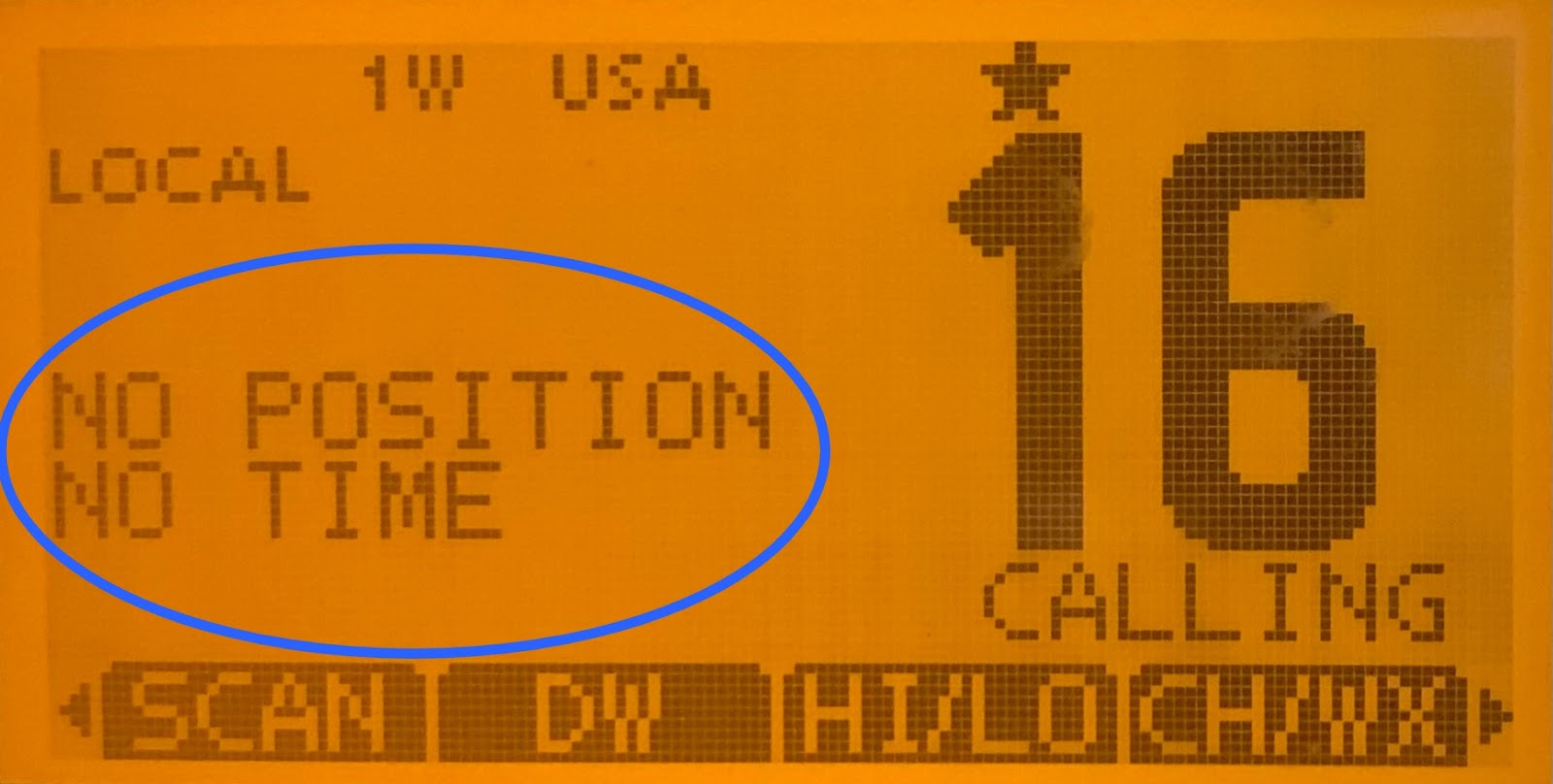
We switched it on and on the screen appeared the statement:


NO POSITION

NO TIME


(No GPS, as a matter of fact, and therefore neither of the above.)


Wow, I thought, how perfect! That fits us to a T!!


And what a luxury and privilege it is to be able to live that way, at least in most stretches of our life so far. Not to have a position geographically, politically, religiously… you name it.


And time, being absolute our own, regardless of the numbers on the screen or arms of a clock, pointing accusingly at bygone minutes.


The yin side…


Keeping it simple, not in need of buying fuel, we can decide on the dry stretch of weather to bring in the needed wood for cooking and heating. Having a lot of dried goods, foraging and fishing allows us to stay in nooks and crannies, estuaries and secluded coves for months on end in blissful solitude! Until we feel the need for change.


But there is also a yang side to this…


Previous years and the last 2 winters we pulled into a small community, live in the harbor, house-sit where dogs, cats and critters need company, supervision and care and reach out with volunteer work.


A mutual need is met with friendships and social interaction, things get done, our input shows real-time results. We work for a greater good and receive it in return.


Experiencing first-hand that nobody is an island, on the one hand, but also feeling that all is temporary in the big and small picture.


We can give with a great amount of energy, patience and tolerance because we have this little back door always open…


No position.

No time.


Like a Zen koan, a blinking radio screen. All you have to do is untie…


…and with that option you find the reason why you’re doing what you are doing.


Monday, February 14, 2022

Surrender


Photo from Everplans


Let us be lovers, we’ll marry our fortunes together.

– Paul Simon


Surrender n: The act of giving one’s self over to another.

– One among many meanings


Surrender


The act of giving one’s self over to another…


In the context of love, surrender is a mutual act of intramission based on trust. Of willing entanglement. Of choosing to turn toward as a way of being. Of letting go of the power of individuality for the greater power of loving partnership.


Surrender is also associated with a unilateral act of submission absent trust. Of unwilling engulfment. Of being forced to turn toward. Of yielding the power of individuality to conquest by a greater power.


The word is powerful and passionate in either sense.


Perhaps because the same word blares at full volume both meanings - will ye and nill ye - surrender is so difficult? 


By the time we find love, so many of us have surrendered in situations and relationships that have left us battered and scarred. We raise the walls and close the gates. We don armor and raise the sword by reflex. The gauntlet becomes as familiar as the backs of our own hands. The glaive becomes our hand.


But to surrender to one another… is there anything so sweet? To dismantle the walls and fling open the gates. To remove with love, patience and care each layer of defense. To win trust. 


To emerge together, hand in hand, to face the world?


*****


Surrender has a shipboard context, too, one which pervades the spectrum.


The ship surrenders itself to the sea. Um. Sort of. Certainly the sea has the first and last word in every discussion.


All aboard surrender themselves to the needs of the ship… as goes the ship, so goes its occupants.


The captain surrenders to a leadership role… one in which power is most definitely not unbridled or lacking in obligations. 


The crew surrenders their independence to the captain’s decision and command… ours is not to question why (at least in the crunch).


All more or less. Consent is nowadays much in vogue, but the heirarchy (sea, ship, captain, crew) doesn’t promote mutuality. Yet neither is it set in stone.


On a happy ship, we look to working with the sea  and not against it. We look to our vessels’ trappings and trim. We aspire to Cptn. Bligh’s ability, but eschew his HR. We jump to with a will when called to duty.


We surrender and sail on.


NOTE: We find that it’s good to recall that the role of Captain is just that; a role. We can and do trade off. Good for learning and a counter to hubris!


Thursday, April 15, 2021

Optimal is Not Optimal: The Sweet of Suites

Heh. Clever. But I believe...
A generalist knows more and more about more and more
until eventually s/he knows something about everything.


A human being should be able to change a diaper, plan an invasion, butcher a hog, conn a ship, design a building, write a sonnet, balance accounts, build a wall, set a bone, comfort the dying, take orders, give orders, cooperate, act alone, solve equations, analyze a new problem, pitch manure, program a computer, cook a tasty meal, fight efficiently, die gallantly. Specialization is for insects.
-- Robert A. Heinlein

If one's only tool is a hammer, every problem looks like a nail.
-- The Law of the Hammer

Avoid optimization; Learn to love redundancy.
-- From Nassim Taleb's Phronetic Rules


Optimal is Not Optimal: The Sweet of Suites

Let's get it said, upfront. I'm a Generalist. Jack of Many Trades. Proud Master of None.

I'm much less drawn to Rules than to Rules of Thumb. I admire precision, but prefer the loose fit. I'll take one-size-fits-most over tailor-made any day of the week. 

So here's the problem with Optimal. It is by definition the very best solution for a particular problem. Often very particular problem. A problem one can foresee with great confidence and specificity. A can opener. A mouse trap. A barrel bolt. These things have solutions that are pretty durned optimal and are notoriously hard to improve upon.

But problems abound, and each has its own, special way of driving us bugnutz.

Generalized (sub-optimal) tools and approaches cover a much wider range of problems. So wide that they often spill over into other whole species of problem. A suite of generalist tools - especially those which work well together - cover a very wide range indeed.

In discussions I read on the subject, Specialized vs General evaluations tend to measure in degrees of Success (often vs Failure). For example, a Specialized tool has a high degree of success, but only at a narrow task. The Generalized tool is assessed at some lower degree of success, but over a swathe of loosely related tasks. Most such writers argue for the General.

What I think is often missed is that Efficiency is a much better standard. The Generalized tool will succeed... it just takes longer for a small fraction of that range. That it does so over a wider range of problems is a better measure of its advantage over Optimal. It is less efficient at one particular task, but more efficient overall.


Veritas rabbet planes


Consider the Rabbet Plane vs the Chisel.

I'm not knocking the Rabbet Plane. This one by VERITAS is a well designed thing of beauty and a boon to the task. If your life calls for a lot of rabbets, it may pay its way. But it's not happy performing most of the other chores one asks even of a plane. Very bottom line, it's a specialized Chisel.

But which fits better into a limited space toolbox? Which is less expensive to purchase? To replace or repair? Can it do any single thing a chisel cannot? No. Can a chisel do things it cannot? Let me count the ways... (okay, I won't... you get the picture).

Another important consideration is reliability. Given quality components, this is the product of simplicity (less to go wrong) and imprecision (loosely 'coupled' components).

Okay, I once said, I get KISS. But imprecision is a virtue??? 

Turns out that precise, tightly coupled systems are prone to failure. The kind of failure that chewing gum and baling wire can't fix. A little sand in the finest Swiss watch and it will drop to merely semidiurnal success. But one can make a sundial with a stick stuck into sand. If it gets kicked over, stick it again and recalibrate. [We can also use that stick to lean on, plant a seed, pry a up a rock, bind a tourniquet, whack a mole...]

Efficiency, as I mentioned, is a factor here... that sundial has its limitations in this regard. Cost / benefit analysis is the guide. That stick is very efficient, in its modest way.

A final point I seldom if ever see discussed is how well tools (or approaches) work together in suites (combinations). What I call the sweet of suites.

Simple, generalized tools can join forces to accomplish almost anything! Their areas of efficacy overlap, affording redundancy and  choice. A heavy screwdriver can be a prise bar can be a chisel can be a lever can be a...

NOTE: We are strictly warned against abusing a tool beyond its designed purpose. HA.

A sweet suite of tools, skills, approaches, methods, guidelines... what-have-you... covers the ground. Covers it better, to my mind, than any ungainly heap of one-shot wonders.

Sweet.


NOTE: I realize that all this is, in fact, a spectrum. At the KISS extreme, brain + opposable thumbs are as simple as it gets, and all the others are to some degree specialized. The kind of optimal we look for will always be the happy middle ground.


Wednesday, April 14, 2021

OVERVIEW: Being Mortal by Atul Gawande


Words to live by.
Words to die by.

Really, what's the difference?

Being Mortal by Atul Gawande

See also this review by Maria Popova

All boldface below are quotes from Dr. Gawande's book.

In Being Mortal, Dr. Gawande writes:

This is a book about the modern experience of mortality -- about what it’s like to be creatures who age and die, how medicine has changed the experience and how it hasn’t, where our ideas about how to deal with our finitude have got the reality wrong.

Our main take-aways from the book:

Quality of life is preferable to mere quantity for the vast majority of us.

Care should be determined - in discussion with one’s family, doctors and care-givers - by asking...


  • What is our understanding of the situation?

  • What do we fear?

  • What do we hope for?

  • What are the trade-offs we are willing to make?

  • What are the trade-offs we are not willing to make?

  • What is the best course of action which serves this understanding?

Consider, answer and communicate, if possible, before the onset of care…

  • Do you want to be resuscitated if your heart stops?

  • Do you want aggressive treatments such as intubation and mechanical ventilation?

  • Do you want antibiotics?

  • Do you want tube or intravenous feeding if you can’t eat on your own?


Hospice approaches and attitudes appear to serve the terminal patient much better than standard medical interventions.

In the Epilogue, Dr. Gawande writes:

We’ve been wrong about what our job is in medicine. We think our job is to ensure health and survival. But really it is larger than that. It is to enable well-being. And well-being is about the reasons one wishes to be alive. 


Those reasons matter

not just at the end of life,

or when debility comes,

but all along the way.


Friday, February 12, 2021

Love Among Mortals

Photo by Silke Schmidtchen


You think you have time.

-- From Buddha's Little Instruction Book by Jack Kornfield


Love Among Mortals

Facing Death is transformative.

Somewhere, in the back of our minds, we all know - in a general kind of way - that we are mortal. But then a moment comes when we look Death in the eye and know it for ourselves... for our Beloved... and that knowledge becomes both specific and immediate.

For me, such a moment marks the very beginning of our One Precious Life. 

As sailors in a wild and wooly place, Anke and I live with perhaps a closer view of Death than many. We often sail near the edge, and far from any hope of help should we fail dangerous.

This last autumn, we had a wild passage, where Death was grinning over our shoulders right along, breathing down our necks. It started with a small thing - a jammed block. So many deadly outcomes are the end of a series of small steps inching, then leaping toward disaster. We were able to manage our issues and all was, in the end, well.

But it was another reminder that - even in the mundane day to day - Death can come for us.

And now Plague walks all the lands of the world.

A time of pandemic binds us all in a moment of the awareness of our mortality. The last century has brought humanity a growing understanding of disease in its causes and cures. Yet we remain stubbornly mortal, and a tiny molecular machine - devoid of hope or malice - reminds us collectively of that fact.

For some, inevitable Death sucks all meaning from Life. For others - count me among them - Death is that dark background against which all life is luminous. It's proximity reminds us to live. NOW.

And what is the one thing worthwhile? That one thing to pursue with all the resource of our One Precious Life?

If you ask me, it's Love.

Power? Pffffft. Fame? Sic transit. Stuff? Can be useful but can also own us and weigh us down. Wealth? You know what it can't buy. 

We think we have time... let's assume we don't, and start living. Start loving.


Happy Valentines Day, all ye Young Lovers! 

(And that includes you, my fellow Elder Farts!)

Tuesday, October 6, 2020

The View from Cold Mountain


Maddy's Camp 
from Cold Mountain, the movie


The mountains look in horror on the madness of the plains.

-- Roger Zelazny


You look at nature. Bird flies somewhere, picks up a seed, shits the seed out, plant grows. Bird's got a job, shit's got a job, seed's got a job. You got a job.

-- Maddy, from Cold Mountain by Charles Frazier


The View from Cold Mountain

Somewhere on the slopes of Cold Mountain, high above the madness of the plains, there lived from a wagon an old woman and her goats.

Or so goes a tale told of another time. Of another bout of madness.

A  refugee from that madness - dying by degrees from a grevious wound - is treated by her skill and kindness. He is set back on his road home with a chance to find and face what awaits him.

Had she lived below, among her fellows, that madness would have swept over her. Maybe she'd have been caught in it, and clamored for the blood of them others. Or maybe she'd have been overwhelmed by it, drowned in its flood or burned by its fire. Or maybe she would have kept her footing, surviving to see the bleak aftermath as the madness settled back to dark mutterings.

What did she feel, looking down from her height. Horror, certainly.

And pity, likely.

Were she younger, at least than she was, she might have felt a tug, too. To do something. To get in there and pull in some direction or another, shoulder-to-shoulder with others. To fight the good fight. To attempt change in whatever direction she felt was right.

But had she descended to the plains, she would have been swept by its madness. The good she was able to do in her story was only possible because she had kept far from the madness of crowds. 

I think it's no small question... what to do in a time of madness?

*****

Picture a river, a canoe upon it and all of us packed in. 

There's supposed to be a waterfall up ahead... stands to reason, but no one has seen it. Some say it's a hoax. Some that it's still many miles on. Some say they can hear it. Some try to warn their fellow passengers.

All the while, the river flows ever faster.

But resources are running low in the canoe, and squabbling for control of them has led to blows. Holes are being punched through the hull, if you can believe it! Few have ears to hear, or time to look up from the fray.

Let's say you are one who hears the thunder of the falls.

Do you do what you can onboard? Do you leap overboard? Do you bother to swim for some kind of shore?

If you stay aboard, surely, you will end up over the falls.

If you leap overboard and do not swim, your journey is over before its time.

But if you leap and swim, you may be ashore to help another from the water.

*****

Leap and swim... this has been our choice. 

Not a moral or courageous choice, nor yet a coward's. Merely one that follows from how we view the sweep of recent history. And I'm talking since agriculture.

Our cold archipelago is our Cold Mountain. Our boat is our wagon. The flora and fauna of these lands and waters our life bearing goats. We are gaining in knowledge and skills to share. And we love it. 

While we know that our bank may too crumble - that we are yet imperiled by the cataract. At least from here we can hold out a hand to those who get themselves in reach.

Do you hear the falls?