Please visit our home site at www.TRILOBOATS.com.

Anke and I live aboard WAYWARD, and wrote about it's design and construction at ABargeInTheMaking.blogspot.com.

Access to the net comes and goes, so I'll be writing in fits and spurts.Please feel free to browse the archives, leave comments where you will and write... I'll respond as I can.

Fair winds!

Dave and Anke
triloboats swirly gmail daughter com

Showing posts with label Rowing. Show all posts

Thursday, July 30, 2026

Glide Rig: A Hybrid Rig for Rowing Sailboats


MUSTELID gliding along
Full Foresail - Roll Reefed Main - Driver


All I wanted was a tall ship
And a star to sail her by
  Through the night.
  Through the night!

-- Motherlode?


Glide Rig: A Hybrid Rig for Row/Sailboats

Why name a rig? Any technical description is a mouthful, and few people appreciate mansplaining. A good name is evocative, calling to mind traditional associations. Or suggestive, offering a clear clue to the nature of its subject.

Gaff Rig, for example, suggests the spar itself and the sail's quadrilateral shape follows. It evokes robust working sail standing against the gale. The more initiated might recall its ability to scandalize—dumping half its area in a sudden gust. They might recall peak and main halyards, running backstays, and the tack-to-peak creases that indicate a correct set.

So, here is a rig in search of a name...

But first, the mandatory get-in-the-door question from The Commitments: “'Oo are your influences??”

Phil Bolger (of course) observed that most of us aren't out to win a race or even do much sailing to windward if we have any choice in the matter. Outboards and engines mostly handle the windward hemi-circle, so why expend design effort, gear and $$$ on maximal windward ability? He accordingly started to offer simpler, cheaper rigs.

That got us thinking. For a rowing, mostly downwind sailboat, we want a long, slim hull. These  are easily driven but offer relatively low form stability. Ultra-shoal draft limits ballast stability. A snug, low-center-of-effort sail plan that is easily handled and reefed pairs perfectly.

On a row/sail craft, we primarily want the sailing rig to pull us down- or across the wind. Positioned well forward as a foresail—clear of a forward rowing cockpit—it should provide powerful lee helm and steady, balanced traction. For sailing upwind, however, the balance picture changes. We want the total CE moved aft to for weather-helm and good tacking.

Quadrilateral and spinnaker-like sails work, but don't transition easily between the two modes.

Enter Frederick Ljungström, inventor of Ljungström Rig a boomless, double Leg o' Mutton (LOM) triangular sail attached along a shared luff to a  rotating mast. Off-wind, it sets and handles much like roller-furling twin staysails, and like them, provides considerable upward lift.

Sailing into the wind, the sails are doubled, overlapping on the lee side and sheeted as one. This constitutes a half-reef, and a large aftward jump of its CE.

To reef, the mast rotates (we prefer righty-tighty, lefty-loosey), furling the sail snugly around the standing spar. No halyards, tack or clew downhauls, bunts, or nettles. Just roll it up and carry on! As a bonus, simple flat-cut LOMs furl tightly with minimal windage, forming conic sections similar to a Crab-Claw rig.

Since a slim hull cannot spread wide sheeting angles, we re-introduced booms along a loose foot. The result is a doubled variation of the Holopuni Quick-Rig (a great name!) which is similar to a setup offered on the SeaPearl 21.

Finally, three-masted junk schooners (e.g., CHINA CLOUD) inspired us with their fine control of their relatively low total CE, bow and stern maneuvers, and reduced area on each mast. Even on a smaller vessel (within reason), the advantages of multiple masts are striking.

Why Balance Matters When Rowing: Multiple sails give fine control over the balance of the helm. Especially when "motorsailing" (row AND sail), good balance leaves our hands free for the oars and reduces steering by stroke with ensuing fatigue. Even over a short haul, that makes a big difference! A driver - often set while rowing when the others are stowed - helps hold the bow up toward the wind. Where the bow want's to 'blow off' this is an asset.

A Problem on the Side—and a Solution

There is a catch with standard booms. They are fixed at the mast and sheeted toward their outboard end. As the sail is reefed, the clew moves inboard of the sheets, pulling laterally on the mid-boom, bending it toward the CE. Heavy spars and compromise arrangements are the usual fix.

Our solution? The Gliding Grommet.

We use a rope grommet that glides along a lightweight boom, with both the clew and sheets attached directly to it. A light clew/sheet outhaul is led through a turning block at boom's end, spreading the sail as desired.

When reefing, ease the outhaul, roller furl the sail as needed and make the outhaul fast. The grommet, clew and sheets are move inboard along the spar. The active, loaded portion of the boom automatically shortens, increasing relative strength. It absorbs the load purely in compression, avoiding mid-span bending stress. Cheap, DIY, and it works like a charm.

Glide Rig Specification

Mulling all this together, pulling out the main points and generalizing, we arrive at...

The "glide" emphasis is on downwind sailing and a strong balance shift for upwind sailing, supported by the working rig (I.e., without sail changes):

  • Foresail in 'cat' position (well forward) and,
    • Sets large area for off-wind sailing
    • Reduces area and moves CE aft for upwind sailing

  • Main near amidships and/or,
    • Backs up the foresail for downwind sailing
    • Becomes the driving upwind sail

  • Driver well aft
    • A smaller sail for balance and riding

"Glide" can be used adjectivally in the usual manner... where we would say "That's a junk schooner, ketch or yawl", we can say "That's a glide schooner, ketch or yawl" or combine them, "That's a glide junk schooner, ketch or yawl." 

Generally speaking, we wouldn't apply the glide adjective to schooners, ketches and yawls that don't pass drive from the foresail to main when switching from down to upwind sailing, and vice versa. Ditto cutters, sloops and catboats.

But any schooner, ketch or yawl is arguably a glide rig. It's a threshold, as is often the case. Boundaries are fuzzy and often the subject of over-heated tavern debate. Personally, I find it a simple matter of personal perspective... we each get one and to each their own.

With this in mind:

  • Two- or three-masted schooner, ketch, and yawl variants may qualify.

  • Main and driver with other planforms and rigging may qualify.

  • Rig particulars—such as specific sail planforms, unstayed masts, roller furling, the Gliding Grommet solution, and such—are handy but optional.


NOTE: We call the stern sail a driver... it seemed the better option among mizzen (confusing), jigger (???), dandy (too high-brow?) and spanker (let's not go there).

MUSTELID's Glide Rig

I would now call MUSTELID's a three-masted glide LOM ketch rig. Fore and main sails are of equal height. LUTRA's main will be slightly taller (also quadrilateral with a sprit in the mix), so I'd call her a three masted glide hybrid schooner rig.

We tested Glide Rig extensively in MUSTELID over a wide range of conditions, as documented in the video series, MUSTELID Venture.

MUSTELID's foresail is a Ljungström sail (double LOM) rigged and positioned as described above.

Her midships main is a single LOM boomed as described and set aft of the forward cockpit. In this position, it becomes the heart of any windward sailing we might do, with the foresail reefed (moving the combined CE aft) and doubled over to sheet as an LOM. We offset this one to clear the BIRDWATCHER cabin's mid-line companionway.

We set a small LOM driver dead aft for offwind sailing, to 'crank in' weather helm, hold the bow up when drifting and serve as a riding sail. It is a big help when rowing in headwinds, especially when we must row at an angle to the wind. This sail was offset opposite the Main to clear the rudder and tiller. In this position, it can be squared across the transom for a mid-line, downwind push.

It is sprit-boomed in pretty much the standard manner. The boom is longer than usual, extending forward of the mast. A U-sheet leading forward attaches one leg to the inboard end of the boom and one to the outboard. This gives us leverage to trim and make fast. The sail is fixed to the mast (no halyard)... to stow, we release the snotter and raise the outboard end of the boom alongside the mast. A light line fixed to the masthead is used to wrap and secure the boom and vertical, hand-rolled bunt of the sail.


Roll yer own and glide on, Friends!


Tuesday, October 7, 2025

Hitchhiker's Guide to Wooden Boats: Review


Margo St-Finch singing her Tide's Going Out


I almost look at it as being a little bit religious;
putting yourself out to the world and saying,
What do you have for me?
Where am I going to go?

-- Ryan Hashagen


Hitchhiker's Guide to Wooden Boats: A Review of Sorts

Every now and again we stumble upon a story that we relate to on some deep level, for reasons hard to identify, much less to express. 

This little film - presented by Northwest Maritime of Port Townsend, WA - is the story of a young couple's weekend adventure by land (camper van and bicycles) and sea (in HA!, a lovingly restored Bolger GLOUCESTER GULL).

Turns out, Ryan lived for a time afloat in Eagle Harbor, where we took our first steps in life aboard. HA! may even have originally been our friends' dory... the one which inspired our own. We surely have friends in common.

Turns out, Margot is a lover- and writer of sea-shanties, among her other artistic pursuits. Her Tide's Going Out was born with the patina of... well... je n'sais pas quoi. But it carries us out on its ebb.

Turns out it's a joyous adventure on the scale of Wind in the Willows, but shared by a couple obviously in love.

There. You see? These descriptions express nothing of why this one is worth your while. The best I can do is recommend that you invest a half-hour of your time to watch. To find out for yourself if it speaks to you.

If you're anything like us, you'll find yourself reviewing it on occasion, to lift your spirits in troubled times.


Sunday, February 16, 2025

LUTRA: One More @%! Boat


LUTRA
30ft x 5.75/4ft x 1ft
...a Sampanic Shorpie?


LUTRA -- Genus name of otters, order carnivora, family mustelidae.

Sampanic -- Having a bow resembling a sampan.

Shorpei -- Sharpie / Dory / Shorey (as distinct from any one of those?).

Meso-Cruiser -- Bigger than a micro-cruiser, smaller than a full-sized cruiser?


LUTRA: One More @%! Boat

Well, here we go again.

A quick recap of our so-called 'retirement plan'... WAYWARD, our home of the last decade is capable and comfortable, but requires a deal of physical input to sail and maintain. As we age, we expect that it would become our less mobile live-aboard. To stay mobile for longer, we added MUSTELID to the mix as an easily handled camper-cruising forager.

MUSTELID's sea trials showed us that she is more than a fair weather sailor, and quite comfortable for longer term life aboard. We feel that we could, in a pinch, make her our sole live-aboard, though in spartan fashion. By nature, however, we lean more to hedonism than asceticism.

Got us thinkin'; always a dangerous activity.

Easy handling is optimal in the smaller vessel, but maintenance on the two vessels is more than WAYWARD's alone (duh). M's lack of insulation and light build puts her at the wrong end of the comfort spectrum... for about six months of the Alaskan, rainforested year, it's cool to cold living. Stowage is minimal (only enough for about four months if depending on food stores). Tools are limited to band-aid level repairs (not reconstruction). No copper plate.

Hmm.

We decided that an enlarged version of MUSTELID would meet our needs in one package. Easy handling, less maintenance, comfortable (and better organized) living aboard with enough displacement to carry longer term gear and outfit. When we're out cruising, with all eggs in one basket we won't worry about the boat left behind.

LUTRA vs MUSTELID

LUTRA is designed on the same general plan, but 6ft longer than M and twice as deep (1ft vs 6in for nearly 2x displacement). We've raised the cockpit sheer by a foot to allow self-bailing decks, wider footing and more storage in the T-locker. The resulting, higher (and widened bow) yields more lift over seas... this might be necessary to counter the increased momentum of a heavier boat.

  • 9ft rowing cockpit (vs 8ft) relaxes our spacing.
  • 3ft aft locker (vs 2ft) adds 'deep' stowage area and extends the aft deck.
  • 12ft cabin (vs 8ft) 
    • Adds room for a small 'chest of drawers' each (more efficient storage).
    • Allows bedding to be moved forward, clearing a space for cook and fire while one of us slugs abed (we call the doubled bedding 'Cloud-Nine'  😴 ).
  • Double displacement floats thicker walls and double windows (improved insulation), copper plate, extra stores and gear, and a thermal-mass rocket stove (design in the works).
A longer, deeper hull, heavy bottom and copper plate will increase form stability and add considerable ballast stability for an even stiffer boat. This allows a more powerful rig, though we'll keep it snug against the sudden williwaws to which our area is prone. Dimensions shown are about the max we might be comfortable with. Reefing is (supposed to be) a snap and sheets are very easy to release, so we'll see.

In particular, we're trying another possibly hare-brained idea:

 The mid-sail is drawn quadrilateral, spread by a sprit and boom inspired by Holopuni Quick Rig. First reef is to brail the sprit vertical (leaving a Leg O' Mutton, triangular sail standing) and rotate the mast one turn to wrap sprit and bunt. From that point, reefing is all roll-furling around the mast as .we've been doing. With luck, this will retain the easy handling of the simpler, LOM (Leg O' Mutton) sails from M.

This increases sail area and drive while moving the CE aft a ways. This will decrease lee helm from the forward sails and hopefully enhance windward performance. With luck, we'll get away with hanging the off-centerboards (which double as filler planks for a cockpit platform) from the forward end of the cabin in the blindspot at the chest-of-drawers.

We've widened the sampan bow which will allow us to use a foremast case. We'll be able to drop it without lifting it clear of the partners (a spooky operation when wind and water 'get up'!). It will be self-bailing and drain clear of the water.

Another departure is eliminating the cabin tumblehome in favor of one-piece sides. This simplifies construction, adds knockdown buoyancy in the BIRDWATCHER style cabin and helps reduce rain on the windows for better visibility.

Other than that, we'll be keeping most of M's features, only adapting as necessary.

The as yet open question is whether we'll be able to row LUTRA at speeds approaching 3kts. On the one hand, her longer waterline length affords about 7kts of Hullspeed (vs M's 6 1/3kts). On the other, we are doubling the underwater cross-sectional area and increasing wetted surface, both of which increase resistance. We'll be thrilled if we gain speed under oars; content to match speed; mildly disappointed to lose a little; chagrined to lose a lot.

Time will tell!


Getting Going

We were all set to build in a beautiful, remote location near Tenakee, but not too near (allowing us to concentrate on the build). Unfortunately, some friends suffered a series of misfortunes and we stepped in. We were glad to help out, but summer and a chunk of fall evaporated with no sure end in sight. We were offered a site in town, so moved back in and got started in late September of 2024.

It's cold and slow going. We're not as resilient as we used to be. Town life is lovely as always, but full of attractions and distractions. But we're chipping away at it.

At present, the hull is complete and we are about to copper the bottom with plate stripped from WW. It's well below freezing, at present, so we're prepping the plate and hoping for a few days of higher 30ºFs/low 40ºFs to render a waxy tape (sealant for the copper) more pliable.

Here's from a few days ago:


Saturday, February 11, 2023

Duetude: Rowing in Tandem


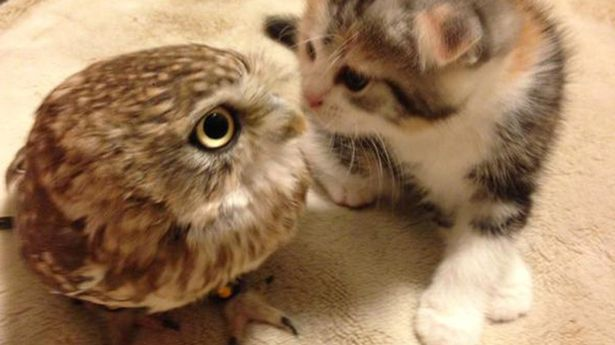
The Owl and the Pussycat sailed to sea
in a beautiful, pea-green boat...


Image from the MirrorOnline


If you want to go fast, go alone. 
If you want to go far, go together.

-- African saying

Duetude: Rowing in Tandem

There are a few things in modern life, undertaken by couples, which require sustained, closely coordinated physical effort. Dancing, and folding large tarps come to mind.

And then there's rowing.

To row a boat together - each with a pair of oars - well... first there are the thousand or so strokes of bickering.

Our cockpit is on the small side, so we can bump if we're a little out of sync. You know. Scratch a nose. Adjust a cushion. Look at the birds.

Both of us are facing aft, and I'm usually at the aft, mid-ship oars (they're longer and I'm bigger). My job is to look over my shoulder as I begin to pull, matching Anke's stroke, and thereafter maintain a steady rhythm. Oh... and if a little bit of oar steering is needed, I favor the correct oar, and maybe even call out RIGHT OAR! or LEFT OAR! in a voice loud enough to hear.

You'd think that's simple enough. It is but it ain't. Takes a while to get each of those down, and a while longer to get 'em in combinations.

Anke, at the forward oars, is continuous power. Her job is to watch out for any quirks in my cadence and avoid collision with my shoulders. She too needs to be steady on the oars, to keep all four moving free. She's got to respond to steering commands promptly, and occasionally shout out some of her own if I've drifted off somewhere.

You'd think that sounds simple enough. It is but it ain't.

But the bickering dies down after a day or two, and the magic sets in...

The magic of moving our vessel... gliding across calm water or working our way into a headwind. The magic of passing through vast and wild land- and seascapes. The magic of our bodies working together in sync, muscles aglow and warm with the effort.

We pull together as one. Our hearts beat as one. We face the work and dangers as one. We savor the pleasures as one, not least those of our own company.

Duetude.


Happy Valentine's!